
Building an Effective Digital Media Strategy
A strong digital media strategy helps an organisation reach the right people, communicate consistently and make better use of its time and budget. Rather than treating each social post, advert or email as a separate activity, a strategy brings digital channels together around clear business goals.
What is a digital media strategy?
A digital media strategy is a planned approach to using online channels to connect with an audience. It sets out what an organisation wants to achieve, who it needs to reach, which platforms it will use and how it will measure progress.
Depending on the organisation, those channels might include a website, search engines, social media, email, online video, digital advertising and partner platforms. The right mix depends on the audience and objectives—not on the number of channels available.
Start with clear objectives
Before choosing platforms or creating content, decide what success should look like. Objectives should be specific enough to guide decisions and measure results. For example, an organisation may want to:
- Increase awareness of a brand, product or service
- Attract more relevant visitors to its website
- Generate enquiries, bookings or sales
- Encourage existing customers to return
- Build a more active and engaged community
Each objective calls for different tactics. A campaign designed to raise awareness may prioritise reach and video views, while a sales-focused campaign may concentrate on qualified visits and conversions.
Understand the audience
Effective communication begins with knowing who it is for. Research audience needs, interests, habits and challenges. Consider what people are looking for, which platforms they use and what might prevent them from taking action.
Audience profiles can help teams turn research into practical guidance. They should be based on evidence, such as customer feedback, website analytics and market research, rather than assumptions. Review them regularly as expectations and behaviours change.
Choose channels with purpose
It can be tempting to create a presence on every popular platform. In practice, spreading resources too thinly can lead to irregular publishing and inconsistent quality. Select channels based on where the audience is active and how each platform supports the objectives.
A website often provides the central destination for information and action. Search can help people discover it, while social media can support conversation and awareness. Email can nurture ongoing relationships, and paid advertising can extend reach or target specific groups. These channels work best when their roles are clear and their messages connect.
Create useful, consistent content
Content should offer value to its intended audience, whether that means answering a question, explaining a service, entertaining viewers or helping someone make a decision. A content plan can map topics, formats, channels and publication dates against the strategy’s objectives.
Consistency matters more than posting constantly. A manageable schedule gives a team time to produce accurate, accessible and well-presented work. Use a recognisable tone of voice, but adapt the format and detail to suit each platform. The same idea may become a short video, an article, a newsletter or a series of social posts.
Make accessibility part of the plan
Digital content should be usable by as many people as possible. Write in clear language, use descriptive headings, add alternative text to meaningful images and provide captions or transcripts for video and audio. Check colour contrast and make sure key information is not conveyed through colour alone.
Accessibility is not simply a final technical check. Considering it from the beginning can make content clearer and more useful for everyone.
Measure what matters
Measurement helps show whether a strategy is working and where it could improve. Choose indicators that relate to the objectives rather than relying on numbers that look impressive but offer little insight.
- Awareness: reach, impressions and video completion
- Engagement: meaningful comments, shares, saves and email clicks
- Website performance: relevant visits, time on key pages and completed actions
- Business outcomes: enquiries, registrations, bookings or sales
Use analytics tools responsibly and in line with applicable privacy requirements. Review performance regularly, compare results with the original objectives and look for patterns. A single post or campaign rarely tells the whole story.
Test, learn and adapt
A digital media strategy should provide direction without being rigid. Audiences, platforms and technologies change, so make room to test different messages, formats and publishing times. Record what was tested and what the results suggest, then use those lessons to guide future activity.
It is also important to respond thoughtfully to changes. A new platform or trend may not suit every organisation. Consider its relevance, risks and resource demands before committing to it.
Bring the strategy together
An effective digital media strategy aligns objectives, audience insight, content, channels and measurement. It gives teams a shared plan while leaving room for creativity and improvement. With regular reviews and a clear focus on audience needs, organisations can make their digital activity more coherent, useful and sustainable.
Top 9 Frequently Asked Questions About Digital Media Strategy Explained
- What is a digital strategy example?
- What is the 3 3 3 rule in marketing?
- What are the 5 main strategies of digital marketing?
- What is an example of a digital strategy?
- What do you mean by digital strategy?
- What is a digital social media strategy?
- What are digital media strategies?
- What is a media strategy example?
- What is an example of a media strategy?
What is a digital strategy example?
A digital strategy example is a retailer aiming to increase online sales by improving its website for mobile users, publishing useful product guides, using search and social media to attract potential customers, and sending personalised emails to encourage repeat purchases. The strategy sets clear targets—such as increasing website conversions—and tracks results using measures like relevant visits, completed purchases and email engagement.
What is the 3 3 3 rule in marketing?
The 3-3-3 rule in marketing has no single, universally accepted definition; its meaning can vary between businesses and campaigns. It is often used as a simple planning guide: identify three audience priorities, focus on three key messages and choose three suitable channels. The idea is to keep marketing clear and manageable rather than trying to reach everyone with too many messages. If using the rule, define what each “three” means for your campaign and check that it supports your objectives.
What are the 5 main strategies of digital marketing?
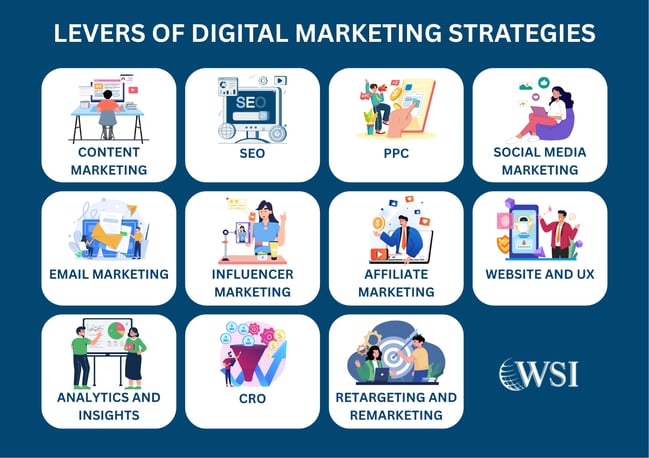
The five main strategies of digital marketing are search engine optimisation (SEO), content marketing, social media marketing, email marketing and paid digital advertising. SEO helps people find a website through organic search results, while useful content attracts and informs potential customers. Social media supports brand awareness and interaction, email helps build ongoing relationships, and paid advertising can reach targeted audiences quickly. The strongest approach combines these strategies in a way that suits the organisation’s goals and audience, then measures results to see what is working.
What is an example of a digital strategy?
An example of a digital strategy is a local retailer aiming to increase online sales. It might improve its website for mobile users, publish helpful product guides to attract people through search engines, share new products on social media and send tailored email offers to customers who have opted in. The retailer would track measures such as website visits, email clicks and completed purchases, then adjust its approach based on the results.
What do you mean by digital strategy?
A digital strategy is a plan for using digital technology and channels to achieve an organisation’s goals. It sets out who you want to reach, what you want to accomplish, and how tools such as your website, social media, email and online advertising can work together. It also explains how success will be measured and how the approach will be reviewed and adapted over time.
What is a digital social media strategy?
A digital social media strategy is a plan for using social media platforms to achieve an organisation’s goals. It defines the audiences to reach, the platforms to prioritise, the content and tone to use, how often to publish, and how success will be measured. By aligning social activity with wider business or communication objectives, it helps ensure that posts are purposeful, consistent and relevant to the people they are intended to reach.
What are digital media strategies?
Digital media strategies are plans for using online channels—such as websites, search engines, social media, email and digital advertising—to achieve specific goals. They define who an organisation wants to reach, what it wants to communicate, which channels and content are most suitable, and how success will be measured. A well-planned strategy helps ensure digital activity is coordinated, relevant to its audience and focused on outcomes such as raising awareness, attracting visitors or generating enquiries and sales.
What is a media strategy example?
A media strategy example could be a local café aiming to increase weekday bookings. It might identify nearby workers as its main audience, use Instagram and local search advertising to reach them, publish short videos featuring lunch specials, and send an email offer to existing customers. The café could measure success by tracking bookings, website visits and offer redemptions, then adjust its content and advertising based on the results.
What is an example of a media strategy?
An example of a media strategy is a local café aiming to attract more weekday customers. It might identify nearby workers as its key audience, share breakfast offers and short behind-the-scenes videos on social media, improve its website so it appears in local searches, and send a monthly email to subscribers. The café could measure success by tracking website visits, offer redemptions and weekday sales, then adjust its content and channels based on the results.